Home
Mobile Massage
Massage Retainer
Ranch Massage Retainer
Ski Massage Retainer
Private Recovery Support
In-home Massage
Massage Services
Practice Architecture
About
My Blog
Home
Mobile Massage
Massage Retainer
Ranch Massage Retainer
Ski Massage Retainer
Private Recovery Support
In-home Massage
Massage Services
Practice Architecture
About
My Blog
More
  • Home
  • Mobile Massage
  • Massage Retainer
  • Ranch Massage Retainer
  • Ski Massage Retainer
  • Private Recovery Support
  • In-home Massage
  • Massage Services
  • Practice Architecture
  • About
  • My Blog
  • Home
  • Mobile Massage
  • Massage Retainer
  • Ranch Massage Retainer
  • Ski Massage Retainer
  • Private Recovery Support
  • In-home Massage
  • Massage Services
  • Practice Architecture
  • About
  • My Blog

Practice Architecture

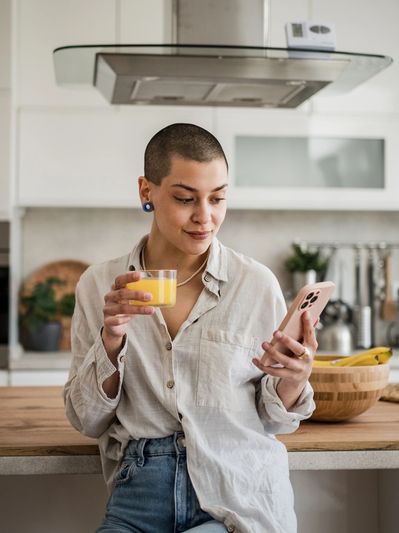
Private in-home wellness environment representing mobile massage.

Introduction 


Massage is my craft, and it has always been rooted in intention, skill, and a deep respect for the people I serve. I entered this work through mobile massage in 2006, when mobile meant volume — loading your table into the car, driving across a city, and seeing as many bodies as you could in a day to make the numbers work. It was physical, it was demanding, and at that stage of my life, it made sense.


Twenty years later, the way mobile massage is structured has not evolved at the same pace as the needs of today’s clients or the realities of today’s practitioners.


• Homes are becoming wellness environments

• Mobile care is becoming ongoing, not occasional

• Clients and therapists are seeking continuity, not rotation

• Therapists are still working inside volume-based, under-designed mobile structures


At this stage of my career, I knew I didn’t want to work inside volume-driven mobile structures anymore. I wanted to bring the level of care I had practiced in high-end environments into a mobile container that made sense for how private households now live — and for practitioners who are ready to work at a different scale than volume-based mobile allows.


I knew I needed a model that honored the depth of this work while elevating the experience for both the client and the practitioner. 


Underneath that commitment is what I refer to as somatic literacy: reading living tissue through touch and responding to what a body is communicating in real time.


The Massage Retainer™ grew out of that commitment. A practice architecture designed to support consistent, high-level in-home care in a way that is thoughtful, grounded, and sustainable. It reflects my belief that mobile massage can evolve beyond convenience into something more intentional:


  • a structure where care can deepen 
  • relationships can stabilize
  • and the conditions of the work support long-range outcomes for everyone involved.


This paper outlines the framework that now defines how I practice.


The Mobile Shift


What Mobile Massage Was Originally Built For


Mobile massage has historically existed to solve one primary problem: on-demand access. 

It made bodywork available outside of clinics and spas. It met people where they were. It allowed therapists to reach clients who couldn’t—or didn’t want to—come into traditional treatment spaces. 


For many practitioners, mobile work also offered autonomy: the ability to build a private client base, set personal schedules, and create income outside of institutional settings.


In practice, this meant mobile massage evolved as a volume-based model. Therapists traveled from home to home, often stacking multiple sessions a day to make the economics work. The structure rewarded flexibility, availability, and throughput. Whether coordinated independently, through small concierge-style networks, or later through app-based platforms, mobile massage was largely organized around single-session bookings, proximity-based scheduling, and continuous client turnover.


This model served an important purpose. It expanded access. It allowed therapists to earn outside of spa environments. It made in-home care possible for busy clients, new parents, travelers, and people who preferred the comfort of their own space. 


For a long time, this structure matched how mobile massage was primarily used: as an occasional service, a convenience, or an alternative setting for otherwise traditional sessions.

It was not built for concentrated periods of care.


And it was not built to support long-range, relationship-based in-home practice.

Those needs were either handled informally—or left entirely to individual therapists to solve on their own.


What Actually Changed


Over the last several years, mobile massage has been quietly repositioned—not by the industry, but by how people now live.


After COVID especially, wellness did not just return to spas and clinics. It moved decisively into private space. Homes were no longer just places to rest; they were redesigned to support recovery, regulation, and daily maintenance. Dedicated treatment rooms, cold plunges, saunas, hydrotherapy tubs, red-light setups, and home gyms became common features rather than luxuries. For many households, the home itself became the primary wellness environment.

As a result, mobile care stopped functioning as an occasional convenience and began functioning as ongoing support.


Sessions were no longer only booked for special occasions or sporadic relief. They became part of weekly rhythms, seasonal routines, and concentrated periods of care. Clients began integrating bodywork into their lives the same way they integrate training, therapy, nutrition, or recovery protocols. They wanted familiarity. They wanted someone who knew their body. They wanted continuity.


I felt this shift as well. Working in homes day after day creates a different kind of practice than rotating through treatment rooms. Patterns become visible. Histories accumulate. Progress depends less on isolated techniques and more on sustained observation, precise adjustment, and trust built over time. I wanted deeper relationships with fewer clients—both to improve clinical outcomes and to move away from structures that required constant volume to remain viable.


In this new context, mobile massage was no longer simply about bringing a table into someone’s house.


It was about supporting private lives.


It was about working inside the rhythms of households, training seasons, recovery windows, emotional transitions, and travel cycles. It was about being present not just for single sessions, but for arcs of care that unfolded over weeks, months, and years.


Mobile had shifted.


How people lived had shifted.


What had not shifted yet was the structure holding the work.


What This Shift Created — and Why Existing Mobile Structures Couldn’t Hold It


As mobile care became more integrated into people’s lives, it began to generate needs that traditional mobile structures were never designed to support.


In my own practice, I began seeing more clients who didn’t just want a massage — they needed a window of care. Post-operative recovery. Athletic seasons. Burnout and nervous-system depletion. Grief. Periods where the body needed steady, regulated input over days or weeks, not a single session booked into a full calendar.


These situations don’t fit cleanly inside one-off scheduling.


They require flexibility, presence, and protected time. They often arise quickly. They shift from day to day. They involve more than one person in a household. And they depend on continuity — on someone who already knows the body, the patterns, the history, and the context.


What they don’t work well with is a structure built around filling isolated appointment slots.


Most mobile systems — whether independent, app-based, or concierge-style are optimized for throughput. They make it easier to find someone, to book someone, to move from house to house. For many therapists and clients, that continues to work well.


But as mobile care became ongoing, those same structures began to show their limits.


Scheduling became a constant negotiation.


Therapists carried the burden of fitting intensive care needs into already full, volume-based days.


Households were left coordinating multiple sessions, multiple providers, and shifting availability during periods when support was most needed.


Working this way, I could feel the mismatch.


The care being asked for was deeper.


The time being required was more concentrated.


The relationships were becoming longer-term.


But the container was still transactional.


It treated mobile bodywork as a series of independent visits rather than as an integrated form of support. It offered access, but not structure. Sessions, but not a framework for ongoing, in-home therapeutic relationships.


What had changed was not the quality of the work.


What had changed was the scale and context of the care needed.


And that change exposed the absence of a model designed specifically for private mobile practice — one that could support both the client’s evolving needs and the practitioner’s long-range sustainability at the same time.


The Massage Retainer™: A New Practice Architecture


The Massage Retainer™ did not start as a business idea.


It started as a practical response to the kind of care I was being asked to provide and the kind of practice I wanted to be inside of.


I was no longer interested in building my mobile work around a calendar full of isolated sessions. I was interested in building a structure that could actually hold the realities I was working inside of: 

  • ongoing recovery
  • private households
  • fluctuating needs
  • emotional seasons
  • training cycles
  • and moments when care needed to intensify rather than wait its turn


The Massage Retainer™ is the practice architecture that emerged from that shift.


It is not a package of sessions.


It is not a membership.


And it is not an on-demand scheduling model.


It is a long-range therapeutic container designed specifically for private, continuity-based mobile care.


Instead of organizing the work around appointments, the retainer organizes the work around relationship, rhythm, and protected capacity. It allows care to unfold inside a stable structure rather than being squeezed into whatever space remains on a full calendar. It makes room for familiarity, responsiveness, and the kind of clinical depth that only develops when the same hands are working with the same bodies over time.


What a retainer fundamentally changes is the question the practice is built around.


Not: How many sessions can I fit in?


But: What kind of care am I structuring this practice to support?


The Massage Retainer™ is built to support care that is cumulative rather than episodic. Care that adapts rather than repeats. Care that lives inside private environments and long-term relationships, rather than rotating through them.


It creates a container where time is not always negotiated and where the conditions of the work, pace, focus, and physical sustainability are treated as part of the therapeutic outcome.

The hands-on work remains the heart of the practice.


The retainer reorganizes everything around it.


From Appointments to Architecture: How This Structure Functions


Before the retainer, even in my own independent mobile practice, everything still revolved around appointments. Sessions lived inside openings. Care had to fit into what was already booked. Continuity could develop, but it was always secondary to what the calendar would allow.


I felt that tension constantly.


I was working in environments where people didn’t simply “book massages.” They arrived for seasons. For training blocks. For recovery windows. For short, physically demanding stays. 


Households would come into town for a week or two and want consistent, sometimes daily care while they were there and then disappear again just as quickly.


In those settings, bodies weren’t moving in neat weekly increments. Needs spiked. Schedules shifted. Entire arcs of care opened and closed inside compressed windows of time.


But the structure I was working inside of was still built around a steady, evenly distributed calendar. It treated every session like an isolated visit that had to compete for space even when what was being asked for was sustained support.


The Massage Retainer™ reorganized that logic.


Structurally, it moved my practice away from being appointment-led and toward being relationship-led. Instead of organizing the work around individual sessions, it organized the work around protected access and therapeutic presence. Time was no longer something clients had to chase. It was something already established within the relationship.


That shift changed how the work could live.


Care no longer had to wait its turn.


Continuity no longer depended on availability gaps.


Capacity no longer had to be negotiated week by week.


Within the retainer structure, the therapeutic relationship becomes the primary unit of organization. 


That makes it possible for care to adapt as life does: to intensify during periods of higher demand, to soften during quieter seasons, and to respond to what is actually happening in the body rather than what was booked three weeks earlier.


What surprised me most was how much this changed my own experience as a practitioner.

When the practice was no longer built on continuous throughput, my attention changed. My preparation changed. My nervous system changed. I was no longer moving between as many bodies, homes, and treatment contexts. I was working inside fewer, longer therapeutic relationships. 


That allowed for greater clinical precision, deeper pattern recognition, and a pace that could support long-range work rather than constant output.


The retainer did not make the work easier.


It stopped forcing the care into a structure that wasn’t built for it.


Architecturally, what the Massage Retainer™ creates is a container that holds both sides of the work at the same time: the evolving needs of private clients and the sustainability of the practitioner delivering that care.


It replaces transactional scheduling with a structure of reserved access designed for private, continuity-based care.


It replaces calendar optimization with capacity design.


It replaces isolated sessions with an integrated care environment.


Access is no longer a byproduct of good coordination. It is a feature of the structure itself. Continuity emerges from that access, rather than being forced out of a calendar.


What Access Changes


When reserved access becomes the foundation of a practice, everything else reorganizes around it.


Time moves differently.


The work becomes more contained.


The relationship between practitioner and client shifts out of transaction and into stewardship.


What this access changes first is the structure of time around the work.


In a transactional model, availability is negotiated each time. Sessions are fitted into what remains. The calendar is always the primary structure, and care adapts around it. Even when continuity exists, access is still conditional — dependent on open slots, timing, and the invisible competition of everyone else who also needs care.


A reserved access-based structure reverses that relationship.


Time is not requested. It is reserved.


Care is not fitted in. It is planned for.


The work is no longer organized around filling a schedule, but around holding capacity.


For my clients, this changes the experience immediately. The work stops feeling like something they need to chase or arrange.  They are no longer negotiating access. They have it. Support is not limited to what happens inside a single session. It can exist across seasons, recovery windows, training cycles, personal transitions — and across travel.


What This Architecture Makes Possible


What this architecture makes possible is not a different kind of scheduling, but a different kind of practice.


When access becomes the foundation, the practice begins to organize itself around arcs of care rather than isolated visits — around seasons, recovery windows, training cycles, transitions, and periods of concentrated need.


Inside this structure, care can meet people where their lives actually are.

  • Inside a household rhythm
  • Inside a travel season
  • Inside a two-week window when the body is being used hard
  • Inside the aftermath of surgery, injury, exhaustion, or emotional strain


Support is no longer shaped by what happens to be available on the calendar.


It is shaped around what the moment requires.


This is where the work changed most for me.


Once I began working inside a reserved access-based structure, continuity no longer had to be constantly negotiated. It emerged naturally from repetition and time held in advance. Working with the same people day after day, or supporting a household across a defined period, allowed patterns to become visible. Adjustments became more precise. The work could respond to what happened yesterday, not restart from zero each session.


I was no longer trying to fit intensive care into the margins of an already full week. I could actually meet clients where they were — physically, logistically, and seasonally — in ways that simply weren’t possible when every session lived inside a volume-based calendar.


This architecture also changed how the work lived in my own body.


Working inside one environment for a period of time, rather than moving continuously from home to home, reduced the physical and energetic cost of the practice. The work became more contained. The rhythm became steadier. My energy could be directed into the care itself instead of being spent on constant setup, breakdown, travel, and schedule compression. Supporting one household over days or weeks is fundamentally different from supporting ten separate ones scattered across a city.


Reserved access didn’t just change continuity.


It changed what the work could realistically hold.


It made it possible to work in a way that respected the reality of private lives, how people actually use their bodies, how they move through seasons, how they train, travel, host, recover, and live. And it made it possible to build a practice that could hold that reality without requiring the practitioner to operate in constant motion or constant volume to survive.


This is the difference this architecture creates.


Not a different level of care —

but a different set of conditions around the care.


Conditions where the work is allowed to move with people.


Where continuity can unfold over real time.


And where the structure of the practice supports the longevity of both the client’s body and the practitioner’s career.


From Mobile Massage to Practice Architecture


I came into this work through mobile massage. And in many ways, I have circled back to it.


Not because it is easy.

Not because it is convenient.


But because over time I came to understand that bodies often speak most clearly where people feel most like themselves. For many clients, that place is home.


Working in private space changes the nervous system. It changes how quickly people settle. It changes what becomes visible under the hands. Over more than twenty years of practice, I’ve learned that where the work happens matters just as much as how it happens.


The Massage Retainer™ did not come from a desire to invent something new.


It came from paying attention to what the work was already asking for.

It came from watching how people live now.

From seeing how care was moving into homes.

From feeling the strain of trying to hold concentrated periods of work inside volume-based structures.

From wanting to build a practice that could support both the reality of private lives and the long-range reality of a practitioner’s body.

It also came from something more subtle.


The longer I work with bodies, the more I understand that this profession is not only physical — it is perceptual. The hands learn. They track. They recognize. They remember.


This is what I mean by somatic literacy: the accumulated intelligence that develops through repeated contact, long-term observation, and ongoing relationship with living tissue. It is how a practitioner learns to feel change, anticipate response, and recognize patterns that don’t appear in a single session.


That literacy can develop everywhere massage is done.


But shorter, concentrated windows of care, seeing the same body day after day, or supporting a household across a defined period accelerate it. Patterns become clearer more quickly. Adjustments become more precise. The practitioner’s understanding compounds instead of constantly resetting.


The Massage Retainer™ is a structure designed to protect and stabilize the conditions that allow that level of practice to exist.


It is a container that supports depth, continuity, and real-world use — in homes, across seasons, and through the rhythms of private life and modern wellness.


Mobile massage is where I began, and it is still where much of my work lives. But the way people use their homes, their bodies, and their time has changed. Private space has become wellness space. Care has become ongoing. And the demands placed on both clients and practitioners now extend far beyond what appointment-based structures were ever built to hold.


The Massage Retainer™ emerged as my response to that reality. Not as a departure from mobile work, but as an evolution of it — a way of structuring private bodywork so it can live inside modern wellness, private households, and long-range care.


It reflects how I see this work continuing to move: out of isolated visits and into integrated, in-home support that can actually meet how people live now.

📍 Serving Bozeman, Big Sky & Paradise Valley, MT  

📞 406-206-7590  

✉️ nicole@nicolejamesbodywork.com  

 Available by appointment only


Nicole James Bodywork offers private, in-home mobile massage therapy in Bozeman, Big Sky, and Paradise Valley, providing clinically informed, somatic literacy-based bodywork.


Copyright © 2026 Nicole James Bodywork - All Rights Reserved.

Privacy Policy | Terms and Conditions


Powered by

This website uses cookies.

We use cookies to analyze website traffic and optimize your website experience. By accepting our use of cookies, your data will be aggregated with all other user data.

Accept